8.21.2007

A Tribute to Miisaq

Frank best port
qapun


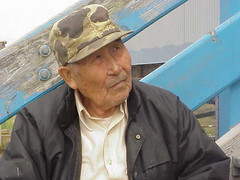
A Tribute to Miisaq Frank Andrew who passed away this April, 2006. One of the last of the GREAT Kayak masters...Miisaq's legacy lives on!


____________________


Slide-show Miisaq's 'Angyaq Revived'
Music: Aerial Boundaries, Michael Hedges


_____________________


REPRINTED FROM: Anchorage Daily News

frank_launch2


Yup'ik elder who revived vanished art of kayak making dies at 89
FRANK ANDREW: A man with a powerful memory kept the skills alive for others.

By ALEX deMARBAN
Anchorage Daily News

(Published: April 5, 2006)

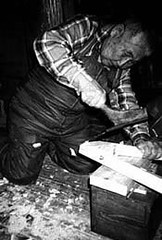
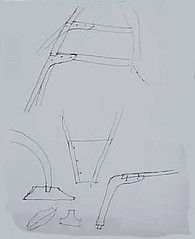
Frank Andrew built traditional Yup'ik kayaks with sealskin, driftwood and ochre, using homemade knives and adzes and a blueprint in his head.
sketchcrop

He died Sunday morning in the Western Alaska village of Kwigillingok, at the age of 89. But not before passing on what he knew.

Traditional kayaks, with their distinctive bow hole for towing, began disappearing from Western Alaska in the 1930s when kayak makers used canvas instead of sealskin. The arrival of motor- powered skiffs finished them off, said anthropologist and author Ann Fienup-Riordan of Anchorage.

By the 1970s, they'd fallen completely out of use.

So had the skills to make them.

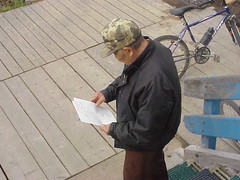
But Andrew, raised in a sod house at the knee of his elders, never forgot. Thanks to his remarkable memory and his desire to teach, he revived the art of Yup'ik kayak making in Western Alaska, said his son-in-law, Bill Wilkinson.
Frank w_ sketch

He did it tirelessly. Severely ill for the past several months, he couldn't breathe without medicine. Still, he planned to fly to Bethel next week to share his kayak-building knowledge at a workshop, Wilkinson said.

A ceremony marking Andrew's life and death will be at the Russian Orthodox church in Kwigillingok, a village of about 350 people, Thursday afternoon

Andrew was a founder of Qayanek, a kayak-preservation center created in Kwigillingok about six years ago. Qayanek, a Yup'ik word meaning "of and about kayaks," is a grant-assisted center that displays the sealskin kayak Andrew once hunted from as well as handmade arrows, harpoons, throwing boards and other weapons and tools.

qayaqneklogo

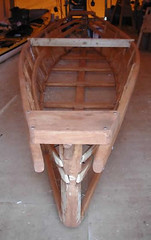
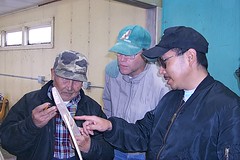
Andrew taught at the center, patiently working with Wilkinson, son Noah Andrew Sr. and grandchildren. He showed his family how to tailor-make kayaks as his father once did, measuring the hunter's hands and arms to determine the boat's dimensions.

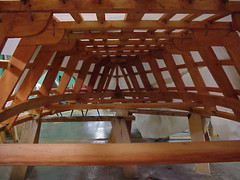
With his help, they selected driftwood with the right grain and bent it with their teeth to create ribs. They cured seal skin with urine, caulked holes with moss and seal oil and found red ochre to decorate the craft.
adults w_fa

Most elders younger than Andrew lack his breadth of traditional knowledge, Wilkinson said. They were educated by non-Native teachers after the Bureau of Indian Affairs opened schools in rural Alaska.

"He gave us a sense of what was lost in the old schools," Wilkinson said.

Andrew had nine children and never raised his hand to them, said his daughter, Mary Ann Wilkinson, who was with him at her home when he died. She called him patient, humble -- and brilliant.
frame Underside

"We just lost a living encyclopedia," she said.

Fienup-Riordan described Andrew as "a mechanical genius."

He was also a wide-ranging storyteller who taught Yup'ik values, such as respect for others, to young people, she said. Many of his stories will be told in an upcoming book.
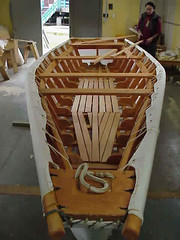
Finished w_ skip

Andrew, who received the Alaska Federation of Natives Culture Bearer Award in 2000, lived to see the fruit of his labor. Traditional Yup'ik kayaks he designed now hang in museums. And Noah Andrew Sr. is employed building the kayaks for educational institutions in the Lower 48.
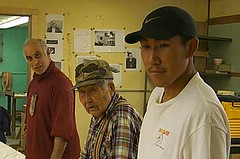
cropcrew

"He was an elder among elders," Wilkinson said. "He gave more than anyone could imagine."

Daily News reporter Alex deMarban can be reached at ademarban@adn.com.

Copyright © 2006 The Anchorage Daily News (www.adn.com)

Link to ADN Story:
http://www.adn.com/life/native_culture/story/7599138p-7510312c.html


______________________


qayaqneklogo
http://www.qayanek.com/


Miisaq''s legacy lives on in the non-profit he helped develop

The small community of Kwigillingok lies on the west side of the Kuskokwim Bay. It is home to a quiet renaissance in traditional boat-building and associated traditional technologies.
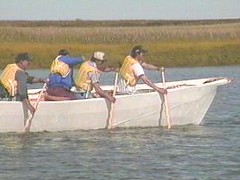
boat

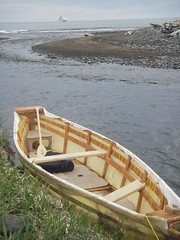
The effort is lead by patriarch Elder Frank Miisaq Andrew. While the community is prominently known for it's long tradition and knowledge-base surrounding traditional qayaq construction, an old tradition of Angyaqs, or large open skin boats, has existed in the mind of Frank Andrew for some time.

A school / community project, centered around a 21st Century Community Learning Center effort, helped Miisaq bring that knowledge to bear and produce a boat that hadn't been viewed or used in the Lower Kuskokwim region for some 70+ years.
cclc_logo

Frank was assisted by Mr. Skip Snaith, shipwright, umiaq historian and builder.http://cronus.rockisland.com/~kyak/index.html

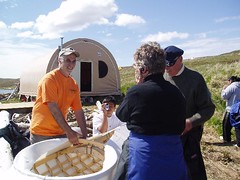
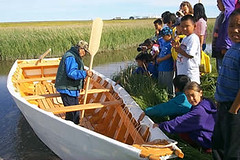
The most memorable moment was Frank taking the Angyaq on the Kwigillingok River. The boat was manned by adult men from the community and the launching witnessed by many of the the youth and other community members.
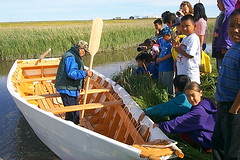
frank_launch


_____________________


Here's the video slide-show of the project:


Music: Aerial Boundaries, Michael Hedges

Labels: ,

6.03.2007

Eskimo Dancing Yupik Yuraq

Yupik Eskimo Dancing by K and 1st grade classes at the Yupik Immersion School. Students presenting at the Camai Dance festival, Bethel Alaska, 2007.

Labels: ,

3.18.2007

Fish Camp Essentials...Subsistence IS a Way of Life

Journey with the 5 year old twins, Mian'aq and Nuq'aq Alexie-Leonard, to the Tuntutuliak traditional fishcamp...take a tour to the Kuskokwim River and expose yourself to:

Fish Camp Essentials


miannuq_harborlight
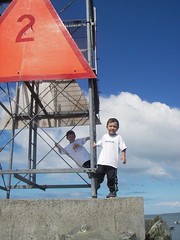
Nuq and Mian at Mekoryuk Harbor, Nunivak Island


VIDEO ARCHIVES (flash video)


To Fish Camp...Nuq and Mian along with
videographer Skip Snaith head 20 miles downriver from the hub community of Bethel to Katie and Nels Alexie's site at Tuntutuliak Fishcamp. Nuq leads us on an exploration of the puyurcivik or 'smokehouse' and the maqivik or traditional 'steambath'.


Maurluq 'Grandma' Katie Alexie Cutting King Salmon,Tuntutuliak Traditional Fish Camp, Kuskokwim River
Kuskokwim River, SW Alaska.


music from Windham Hill, The First Ten Years,
Mike Marshall and Darrel Anger track entitled "Dolphins"


Apa'urluq 'Apa' 'Grandpa' Nels describes the fine art of smoking fish to guest videographer, Skip Snaith


Fish Camp Store, provisioning in the 'bush...Apa' Nels has a store!


Apa' Nels Alexie, Mian'aq and Nuq'aq...Fish Camp Schooling. Even young chidren are given meaningful tasks at camp...here, the boys are responsible for cutting wood for the maqivik stove which will be fired up for the evening bath.


_________________________

SWITCH

To many non-Indian observers, including policymakers, subsistence is nothing more than a cultural antique -- an increasingly ineffective holdover from previous times that will inevitably disappear as market economies take over. However, subsistence is not a relic from the past. It has and continues to be the foundation of Alaska Native societies. Today, the subsistence way of life is necessary for the physical, cultural and economic survival of Alaska Native people.

Most of the 220 small Native villages in Alaska are located on or near the shores of a river or a lake, or on the coasts of the North Pacific, Bering Sea, or Arctic Ocean. The proximity to water is no accident and reflect s the dependence of Alaska Natives on the harvest of fish stocks for sustenance and the basis of their traditional way of life. In many Native villages, fresh meat, fish, and produce are unavailable except through the subsistence harvest.

Yet, as important as hunting and fishing rights are to the physical, economic, traditional, and cultural existence of Alaska Native people, the Alaska legislature refuses to recognize the importance of the subsistence way of life. The State views subsistence as nothing more than the taking of a natural resource, and as something that all citizens of the state should be entitled to engage in on an equal opportunity basis with little distinction between sport and trophy hunting and subsistence needs.

Under a federal law that protects Alaska Native subsistence rights, the State's refusal to recognize the subsistence priority requires the takeover of subsistence fishery management by the federal government. However, despite a court order mandating that the federal government implement this priority, Alaska's congressional delegation and the Department of the Interior have stifled this mandate for several years in a row, by agreeing to moratoriums which deny funding for this critical federal takeover.

[exerpted from: http://www.ewebtribe.com/NACulture/articles/alaskasubsis.htm]


Federal Governments Div. of Subsistence Management:
http://alaska.fws.gov/asm/index.htm

State of Alaska, Div. of Subsistence:
http://www.subsistence.adfg.state.ak.us/

Native American Rights Fund...legal archives, search Alaska Subsistence:
link to web query results "alaska subsistence" here

Good General Info on Subsistence:
http://www.subsistmgtinfo.org/basics.htm

State of Alaska Subsistence Court Decisions:
http://www.law.state.ak.us/department/civil/nat_cases.html

Labels: ,

12.16.2006

Yupik Eskimos Longing....


Yupik Eskimos long for a taste of Alaska at Kuwait's


By Megan McCloskey, Stars and Stripes
Mideast edition, Monday, December 11, 2006


CAMP VIRGINIA, Kuwait — Filet of seal. Marinated moose. Boiled walrus.
These items aren’t likely to show up on the menu at the local dining facility in Kuwait.

So when Sgt. 1st Class Francis Uttereyuk got a care package last week from Alaska with caribou jerky, he was suddenly a very popular guy at camp.

42103_121017252b
Megan McCloskey / S&S
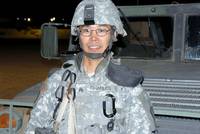
Sgt. Teddy Charles, 44, lives in Tooksuk, an Alaskan village of more than 700. His brother-in-law is helping to support his wife and seven children while he is deployed.


“They don’t last,” Staff Sgt. Michael Uttereyuk, Francis’ brother, said about the packages with food from southwestern Alaska’s harsh tundra along the Bering Sea.

The Uttereyuks and about 100 others with the 2nd Battalion, 297th Infantry of the Alaska Army National Guard are Yupik (pronounced YOU-pick) Eskimos. Many of the Yupik live in isolated, small villages where subsistence hunting, fishing and gathering is the main source of their diet. And the deployed Yupik in the Kuwaiti desert are missing their native food.

Like duck soup made with a sweet-tasting wild herb the Yupik call “kapuukaq.”

“I can imagine it right now,” said Michael Uttereyuk, 38, patting his stomach.

Or seal with a plant with a mild onion taste, foraged by mice and then picked from their dens.

42103_12101709b
Megan McCloskey / S&S
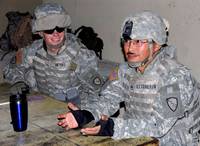
Staff Sgt. Michael Uttereyuk, right, chats with Pvt. Jan Meyers and other soldiers during a shift of gate duty at Camp Virginia Friday night.


In the spring season, the eggs of ducks, geese and seagulls are popular in the villages along the coast.

“Wild eggs taste pretty … wild,” said Michael Uttereyuk, of Scammon Bay, a village of about 500. “They’re more gamey. They don’t taste like chicken eggs.”

The food at Camp Virginia’s dining facility just doesn’t compare.

“I’m tired of it already,” said Sgt. Andrew Charles, 44, of Chevak, Alaska.

The unit has been in Kuwait for about six weeks and will be doing a one-year tour.

For those who are the main hunter in their household, being deployed is quite a burden for their family. Arrangements have to be made for others to step in.

Sgt. Teddy Charles, 44, who lives in a village of more than 700 called Tooksuk, said his brother-in-law is supporting his wife and seven children while he is away.

Francis Uttereyuk said before he deployed he bought extra freezers and packed them with food in preparation for his absence. His 17-year-old son is taking over the hunting duties, and his wife’s family is helping out as well.

42103_1210165853b
Megan McCloskey / S&S
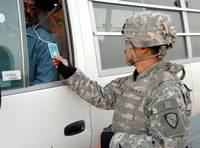
Staff Sgt. Michael Uttereyuk checks the ID of a driver entering Camp Virginia Friday evening.


“The community shares with each other,” Michael Uttereyuk said.

The Yupik have been introducing the other soldiers to their native food. The other day one of them got a care package with Eskimo ice cream, called “agutak” in Yupik. The dish isn’t frozen but rather more of a yogurt made from salmonberries, blackberries and red berries.

“I thought it was excellent,” said Pvt. Jan Meyers, 19, of Anchorage, who tried the classic Yupik dessert for the first time.

Yupik villages are fairly secluded from one another and the rest of the state, because there are no roads in southwestern Alaska. People travel by snowmobile and compass in the winter and four-wheeler in the summer. Gas has to be brought in by barge during the summer to last through the cold months and grocery items are flown in. A gallon of milk costs around $11.

42103_1210165725b
Megan McCloskey / S&S
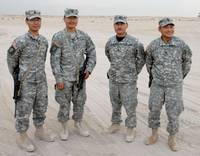
Brothers Sgt. Teddy Charles and Sgt. Andrew Charles and brothers Staff Sgt. Michael Uttereyuk and Sgt. 1st Class Frances Uttereyuk, at Camp Virginia in Kuwait. The Alaska Army National Guard soldiers are Yupik Eskimos and live in isolated villages in a part of Alaska that lacks roads. Both sets of brothers say they are seeing much more of each other in Kuwait than they do at home in Alaska.


For some of the 297th soldiers who have multiple family members in the Guard, the deployment to Kuwait means seeing a whole lot more each other than when they’re home in Alaska, which for the Uttereyuk brothers was “once in a blue moon,” Michael said.

First Sgt. John Flynn has been trying to bring a little bit of home to Kuwait. An important part of the Yupik social network is the steam bath, which is used not only for hygiene but also for mediation and relaxation. Flynn is working on getting one set up at Camp Virginia.

For now, the soldiers like to spend their free time sitting around together and talking in their native tongue, which has become a bit of an issue at work.

The leadership has banned Yupik on the radios.

“We’ve been having a problem with communication,” Flynn said.

Flynn, who is from Bethel, said many of the soldiers in leadership positions, including himself, speak Yupik as their primary language.

“It’s a liability in some cases,” Capt. Robert Gawrys, of Anchorage, said, adding: “They want to revert to Yupik and we’ve been making a point to say ‘English, guys.’”

But Gawrys said the Yupiks’ sense of family is an advantage.

“Everybody is pretty close-knit,” he said.


© 2006 Stars and Stripes. All Rights Reserved.

Labels:

5.02.2006

Manaq'ing

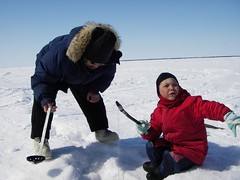
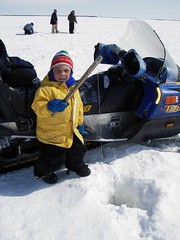
Travel with 'the twins...five year old Nuq and Mian travel down the Kuskokwim to Tuntutuliak Fishcamp for spring-time ice fishing...catching Pike and enjoying the spring-time weather.

icefish_miankaty1icefish_nuqcandid2

Boys travel about 20 miles with a snow-machine to where the Johnson River flows into the main channel of the Kuskokwim. Trails are hard snow pack, temperature ~20dF ambient and the sun is shining.

Holes are drilled in the ice and gigging lures with blackfish parts as additional bait attract Pike to the boys lines...lots of fun is assurred! Good eating too!


Labels: ,

12.10.2005

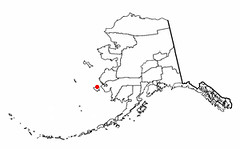
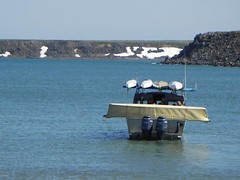
Angyaq Construction Project, Nash Harbor, Nunivak Island

AKMap-doton-Mekoryuk

Skip Snaith, the staff and students at Nash Harbor Science and Technology Camp created this magnificent boat. Not only was it a work of art but it became the primary work boat for the Nash Harbor Camp.

Copy of nash05 420

The boat was constructed out of yellow cedar, complete with plywood flooring and a Dyson Baidarka nylon skin covering. The boat is both hand tied with some traditional brass fittings and rivet structural components.

tradboat Copy of nash05 461


Labels: ,

3.11.2005

Edward Curtis', Nunivak Island

Edward Curtis

nwimg10

The North American Indian by Edward S. Curtis is one of the most significant and controversial representations of traditional American Indian culture ever produced. Issued in a limited edition from 1907-1930, the publication continues to exert a major influence on the image of Indians in popular culture. Curtis said he wanted to document "the old time Indian, his dress, his ceremonies, his life and manners." In over 2000 photogravure plates and narrative, Curtis portrayed the traditional customs and lifeways of eighty Indian tribes.

http://memory.loc.gov/ammem/award98/ienhtml/special.html


View a slide show of Curtis' documentation during a visit to Nunivak Island, circa 1927, people, places and things!


Music: Phillip Aaberg, Theme for Naiomi Uemura, from Windham Hill Sactuary

Labels: ,